
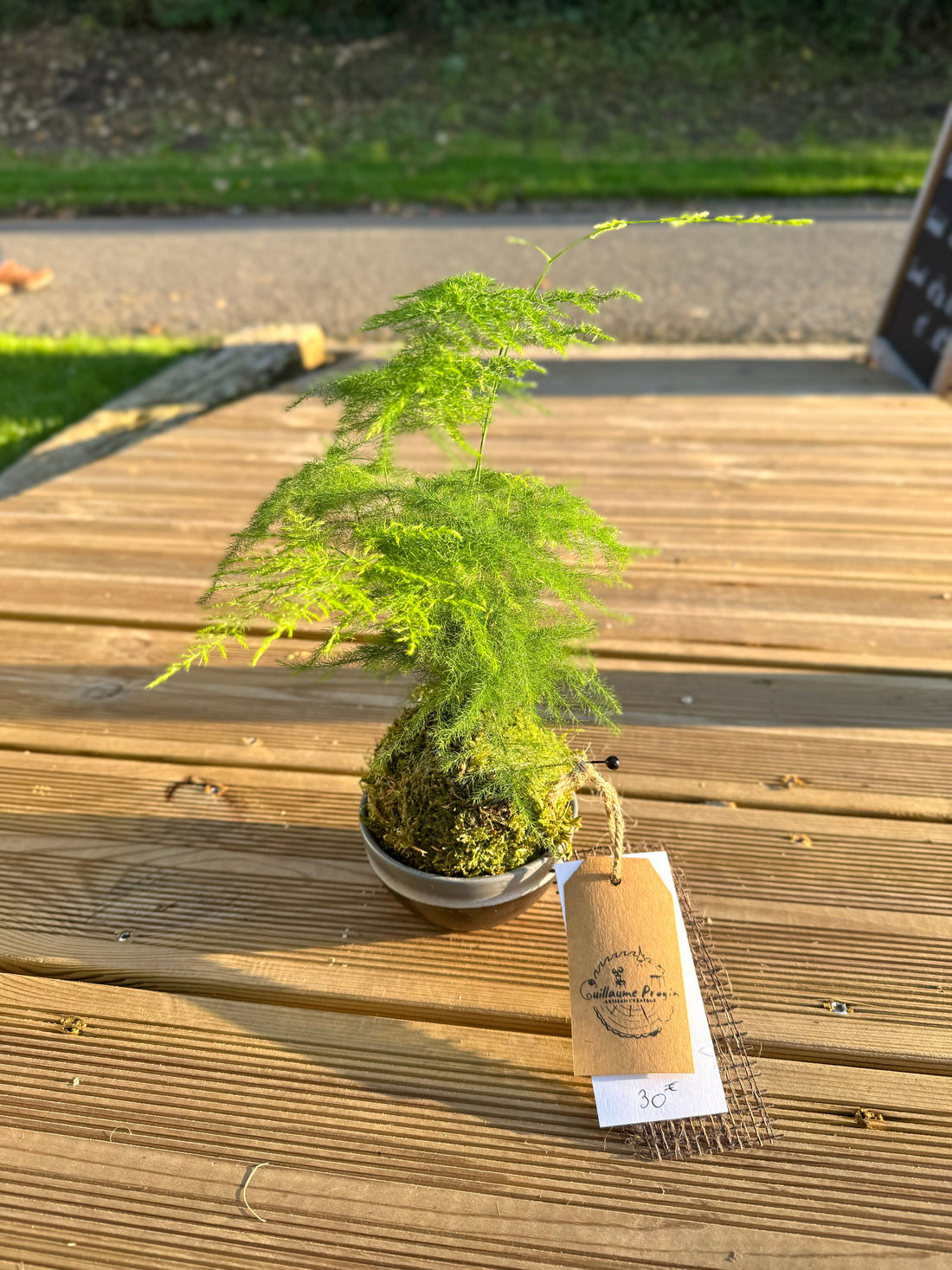
Kokedama: Japanese Art That Enhances Your Interiors
Kokedama is an ancient Japanese technique that is increasingly popular with plant lovers and those who appreciate natural decoration. A cross between bonsai and floral art , it brings a touch of natural elegance and a zen atmosphere to any interior. But where does this unique plant art come from? How do you care for a Kokedama to keep it beautiful and healthy? Let's discover together the secrets of this plant sphere that transforms interior design.
Origin of Kokedama: A Japanese Tradition Inspired by Bonsai
The word Kokedama (苔玉) literally means "moss ball" in Japanese ( koke = moss, dama = ball). This technique originates from the art of Nearai , a Japanese method of growing plants without pots, by wrapping their roots in moss and a specific substrate.
Developed in Japan in the early 20th century, Kokedama draws inspiration from bonsai and kusamono , which emphasize the minimalist and natural aesthetic of plants. Its arrival in the West has captivated interior design and decoration enthusiasts thanks to its refined and poetic nature.
Why Adopt a Kokedama?
Kokedama is more than just a decorative element. It brings many benefits to your home:
✅ An elegant touch of greenery : Its natural and refined appearance makes it a unique decorative element.
✅ Space saving : Suspended or placed on a wooden or ceramic support, it easily fits into small spaces.
✅ Limited maintenance : Unlike some houseplants, it requires very little attention.
✅ A zen and soothing atmosphere : Inspired by the Japanese garden, it promotes a relaxing atmosphere.
Whether you are a green plant enthusiast, a fan of plant decoration or simply looking for an original gift idea , Kokedama is a trendy and natural alternative.
How to Care for a Kokedama?
Maintaining a Kokedama is simple, provided you follow a few essential rules.
1. Watering: A Regular Bath
Kokedama are not watered like potted plants. Here's the ideal method:
- Submerge the foam ball in a basin of room temperature water for 5 to 10 minutes .
- Wait until no more air bubbles escape.
- Gently drain the sphere before placing it back in its position.
- Frequency: 1 time per week in winter , 2 to 3 times per week in summer (depending on the humidity of your home).
2. Exposure: Light But No Direct Sunlight
Kokedama thrives in soft, indirect light. Avoid placing it in direct sunlight, as this can quickly dry out the moss. Ideally, it should be located near a well-lit window , but out of direct sunlight.
3. Humidity: A Suitable Environment
Kokedama plants prefer a slightly humid atmosphere. Remember to mist the moss with water to prevent it from drying out, especially during heating season.
4. Pruning and repotting
Over time, the moss may deteriorate. You can replace it or reinforce the structure with a new layer of moss and cotton yarn. If the plant grows too large, repotting may be necessary after 1 to 2 years .
Where to place a Kokedama in your decor?
Kokedama is extremely versatile and fits into different interior styles:
- Suspended : For an airy and minimalist effect, hang it with a transparent thread or natural rope.
- On a wooden or ceramic base : For a minimalist and authentic decoration.
- As a centerpiece : It will bring a unique botanical touch to your meals and events.
- In a bathroom : Some varieties, such as ferns , appreciate humidity and create a tropical atmosphere.
Kokedama: An Original and Trendy Gift
Giving a Kokedama is an excellent way to surprise a loved one with an original and natural gift . It's suitable for all plant lovers, even those without a green thumb!
Whether for a birthday , a housewarming or simply to give pleasure, Kokedama is an original alternative to classic potted plants.
Conclusion: Embrace the Kokedama Trend!
The Kokedama is more than just a plant: it's a true work of botanical art , bringing serenity and beauty to your home. Easy to care for and adaptable to any space, it appeals to plant enthusiasts as well as lovers of zen and minimalist decor .
Looking to incorporate a Kokedama into your décor or give a unique botanical gift? Discover our handcrafted creations and embrace this timeless Japanese art!
